11 min read
History of Corsica: from Pasquale Paoli to today, the key dates
Key dates in the history of Corsica: the revolt against Genoa, Pasquale Paoli, Ponte Novu 1769, Aléria, the FLNC, the statutes and autonomy, told straight.
Corsica’s history with France is a story of conquest, of rallying, of emigration, of revolt and of negotiation, and it is not over. It is often told from one of two camps. Here we stick to dated, sourced facts, and where the figures or the readings differ, we say so. The Castagniccia holds a special place in it: Corsica’s 18th century was played out in the convent of Orezza, at Casabianca and at Morosaglia, and the bridge of Ponte Novu is only a few valleys away.
The revolt against Genoa (1729–1755)
In the early 18th century Corsica belonged to the Republic of Genoa. The revolt broke out in 1729, and the Castagniccia became one of its strongholds, with the Ampugnani, the Rostino, the Orezza and the Alesani at its core.
- April 1731: at the Orezza convent, theologians gathered around Canon Orticoni declare the rebels’ cause “holy and just”.
- January 1735: the Orezza consulta (assembly) elects three Generals of the Nation, votes the text of a constitution and places the Corsican people under the protection of the Virgin; 8 December becomes the old Corsican national feast.
- April 1736: a German adventurer, Theodor von Neuhoff, who had landed at Aléria, is made King of Corsica at Alesani. He leaves the island in November and dies in London in 1756.
- 1745–1751: in 1745, at the Orezza assembly, the Ampugnani and the Casacconi choose their own paceri, “peacemakers”; in 1751 Gian Pietro Gaffori is elected general at Orezza.
Pasquale Paoli and the Corsican state (1755–1769)
Pasquale Paoli was born in 1725 at Stretta, a hamlet of Morosaglia. On 15 July 1755, at the convent of Saint-Antoine in Casabianca, in the Ampugnani, a consulta elected him General of the Nation (other accounts place the election at Caccia or at Orezza: the place is disputed).
He built a state: a constitution written in Italian in November 1755, a Diet whose deputies were elected in each community by the men over 25, coins struck at Murato from 1761, a university at Corte in 1765. Women voted too: the women who were heads of family, widows or wives whose husbands were away, voted in their village assembly, which elected the podestà and the procurator sent to the Diet; the right was older than Paoli, from Genoese times, and his republic kept it. Corsica is one of the first places in Europe where women voted. As early as August 1755 a travelling commission toured the Rostino, the Ampugnani and the Tavagna with a decree against the vendetta. At Stazzona, in the Orezza, arms were made for the nation.
1769: Ponte Novu and the French conquest
- 1768: under the Treaty of Versailles, Genoa hands its claim on Corsica to France, which invades the island.
- 8–9 May 1769: at the Genoese bridge of Ponte Novu over the Golo (commune of Castello-di-Rostino), the French army of the comte de Vaux defeats the Corsican force led by Carlo Salicetti. The toll is disputed: some accounts speak of hundreds massacred on the bridge, Paoli’s own reports of far fewer.
- Paoli goes into exile in Britain. Guerrilla resistance holds out in the mountains until about 1775.
- June 1774: the repression after the Niolu rising is harsh. Eleven men are hanged, on 23 or 25 June depending on the source, the youngest aged 15 or 17; 52 to 60 others are sent to the galleys of Toulon.
From the Revolution to Napoleon (1789–1815)
The story does not end with the conquest, and it does not run one way only.
- 30 November 1789: at the request of Corsican deputies (Saliceti among them) and of Bastia, the National Constituent Assembly declares Corsica part of the French realm and lets the exiles return. Paoli comes home in July 1790, cheered in Paris and on the island; in September the Orezza consulta gives him full powers.
- 1793–1796: the Convention orders his arrest; he presides over the Corte assembly that breaks with it and calls in Britain. The Anglo-Corsican Kingdom (1794–1796) has King George III as head of state and Sir Gilbert Elliot as viceroy; Paoli, sidelined, goes back into exile in 1795. He dies in London in 1807; his remains return to Stretta in 1889, where his birthplace is now a museum.
- Napoleon Bonaparte, born in Ajaccio in 1769, a few months after the conquest, makes the island’s name famous across Europe; Bonapartism remains a strong current in Corsican politics throughout the 19th century.
The 19th and 20th centuries: emigration, wars and language
- The customs rules: rules first set in 1768, then taken up again in 1816–1818, let French goods into the island freely and taxed Corsican goods sold on the mainland as foreign. The author Christian Mondoloni dates their repeal to 1908; the journalist Sampiero Sanguinetti says they lasted 94 years, until 1912. Mondoloni links them to the island’s economic collapse and to 200,000–230,000 departures between 1870 and 1960: that is his interpretation, not a settled count.
- The empire: around 1920, Corsicans hold about 20 % of the posts in the colonial administration.
- 1914–1918: about 52,800 Corsicans mobilised and about 11,000 dead according to the historian Jean-Paul Pellegrinetti; a name-by-name count gives 11,691. The heavy and unequal mobilisation remains a wound in memory. In the Ampugnani, the village of Scata fell from 179 inhabitants in 1906 to 124 in 1921. The details, the village’s plaque and the myth of the 40,000 dead are in our article Scata and the Castagniccia in the Great War.
- Between the wars: the newspaper A Muvra (1920) and the Partitu Corsu d’Azione (1922) call for autonomy; part of the movement drifts towards Fascist Italy, which claims the island, and comes out of the war discredited.
- 1942–1943: Italian, then also German occupation. After Italy’s armistice of 8 September 1943, the Resistance rises and, with French troops from Algiers (the Bataillon de choc, tirailleurs, goumiers) and Italian units now fighting the Germans, frees the island by early October: the first French department to be liberated.
- The language: in 1951 the Deixonne law lets four regional languages into schools but leaves Corsican out, treated as a “dialect” close to Italian; it is added only by decree on 16 January 1974. Older people remember Corsican being forbidden at school.
The Riacquistu and Aléria (1957–1975)
- 1957–1965: the state creates SOMIVAC to develop farming on the eastern plain; by 1964–1965 about 75 % of the land it has handed out has gone to pieds-noirs, French settlers back from Algeria. A wine-adulteration scandal follows.
- 1960: the government surveys the Argentella massif for underground nuclear tests; a mass protest makes it drop the plan on 4 June 1960.
- 1970–1975: the Riacquistu, the cultural “taking back”: ADECEC is founded in December 1970 at Cervione, in the Castagniccia, followed by the review Rigiru and the group Canta u Populu Corsu.
- 21–22 August 1975, Aléria: about thirty armed militants of the ARC, led by Edmond Simeoni, occupy the wine cellar of a pied-noir grower to denounce the eastern-plain land policy and the wine scandal. The government sends 1,200 gendarmes and riot police; two gendarmes are killed in the assault. The ARC is banned on 27 August; a policeman is killed by a sniper in the Bastia riots that follow.
The FLNC, violence and the state’s response (1976–2014)
- 4–5 May 1976: the FLNC (National Liberation Front of Corsica) announces itself with 22 explosions in Corsica, Nice and Marseille. “FLNC” and “IFF” (I Francesi Fora, “the French out”) start appearing painted along the roads.
- 1977: Francia, a clandestine anti-independence group described as a local branch of the SAC (a Gaullist strong-arm network), bombs nationalist premises, among them the presses of Arritti: illegal violence came from the state’s side too.
- 1978–1982: the NATO base at Solenzara is attacked, more than 115 bombings take place in the first three months of 1979, and a nuit bleue (a night of coordinated bombings) brings 99 attacks on 19 August 1982.
- The prisoners: from 1980 the FLNC demands political-prisoner status; Corsican prisoners are long held on the mainland, and bringing them closer to home remains a demand for decades.
- The 1990s: the FLNC splits into the Canal historique and the Canal habituel; their feud kills between about 15 and 130 people, depending on who counts. The armed groups partly finance themselves with a “revolutionary tax” on businesses; a Canal historique leader is linked to the Brise de Mer gang while denouncing others’ “mafia ambitions”.
- 6 February 1998: Prefect Claude Érignac is assassinated in Ajaccio by a dissident group.
- April 1999, the paillotes affair: gendarmes of a special unit burn down a beach restaurant south of Ajaccio on the orders of the prefect of the time; the prefect and the gendarmes are convicted.
- 2003–2012: arrested in 2003 after four years on the run, Yvan Colonna is convicted of Prefect Érignac’s murder, finally in 2012, to life imprisonment. There was no material evidence, the case rested on testimony, and he always denied it.
- 25 June 2014: the FLNC announces its demilitarisation. The total number of attacks over four decades is disputed: more than 4,500 claimed according to AFP, more than 10,500 attributed in other counts.
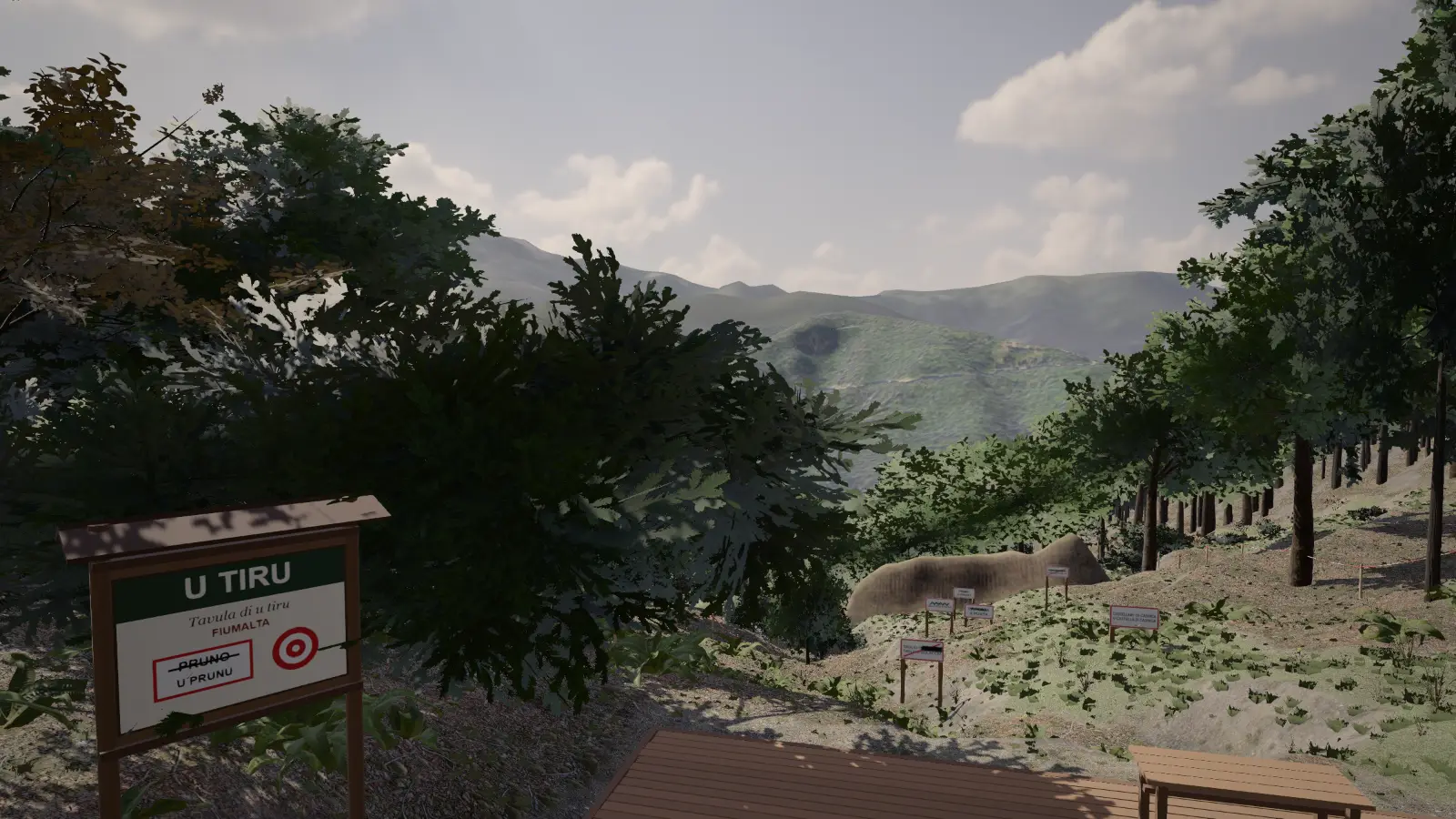
The road signs bear witness: French names crossed out, painted over or riddled with shot. Fieldwork over 1,050 km of roads (2010–2011) found such shooting “extremely widespread”, with nothing to show that organised groups direct it.
Statutes, a referendum and autonomy (1982–2026)
- 1982: a special status creates a Corsican region with its own Assembly, first elected in August 1982.
- 1991: the Joxe status recognised “the Corsican people, a component of the French people”; the Constitutional Council strikes the phrase out on 9 May 1991, as the Constitution knows only the French people. The law of 13 May 1991 creates the Collectivité territoriale de Corse.
- 2002: the law that came out of the Matignon process grants more powers and offers Corsican in schools.
- 6 July 2003: in a referendum, Corsica’s voters reject a single local authority with 50.98 % voting no, a margin of 2,190 votes.
- 2013–2014: the Assemblée de Corse votes co-official status for Corsican (36 in favour), then a “resident status” for buying property; the state refuses both, citing Article 2 of the Constitution for the language.
- 2015 and 2017: nationalists win the territorial elections for the first time (35.34 %, then 56.46 % and 41 seats) and three of Corsica’s four seats in the National Assembly.
- 1 January 2018: the single Collectivité de Corse replaces the region and the two departments anyway, under a 2015 law.
- March 2022: attacked on 2 March by a jihadist fellow inmate in Arles prison, Yvan Colonna dies on 21 March. Weeks of riots follow: the Ajaccio courthouse is set on fire, and 102 people are injured in Bastia on 13 March, 77 of them police. Autonomy talks open with the Interior Ministry.
- October 2023: the President of the Republic speaks of autonomy before the Assemblée de Corse on 28 September; on the night of 8–9 October about twenty explosions, claimed by two branches of the FLNC, destroy among other things 34 homes, mostly second homes.
- 2024–2025: the state and Corsican elected officials agree on a constitutional wording (March 2024). The courts confirm that Corsican may not be used in the debates of the Assemblée de Corse (Conseil d’État, 5 June 2025). The bill “Une Corse autonome au sein de la République” (an autonomous Corsica within the Republic) is filed in the Senate on 30 July 2025.
- 2026: on 27 April the government withdraws the bill from the Senate, whose agenda is full, and files it at the National Assembly the same day (no. 2697). The Assembly passes it at first reading on 23 June 2026, by 271 votes to 202. On 5–6 August, at a clandestine press conference, armed members of the FLNC-UC call the process a “masquerade” and threaten non-Corsicans who come to settle; the anti-terrorism prosecutor opens an investigation. The Senate is due to examine the bill in committee on 21 October and in plenary on 26 October 2026. Both chambers must pass the same text, after which it needs either Congress (a three-fifths majority) or a referendum. Corsican, for its part, still has no official status.
Several views of the same history
- For nationalists, the conquest of 1769 ended an independent state, and the struggle, armed for its supporters, answered a state that refuses to recognise a Corsican people, lets the land be sold off and has itself broken its own laws on the island (Francia, the paillotes, prisoners held far away, a man dead in prison in 2022).
- For the state and the courts, the FLNC’s attacks are terrorism, judged as such; the Constitution knows one French people and one language of the Republic; the state has answered with special statutes, decentralisation and, since 2024, the autonomy bill.
- The victims and their families belong in this history: the gendarmes and the policeman killed in 1975, those killed in the feuds between clandestine groups, the prefect assassinated in 1998, the owners of bombed property, the people threatened in 2026.
- Corsicans themselves are divided: the 2003 referendum came down to 2,190 votes; many vote nationalist while rejecting violence; anti-mafia collectives were founded in 2019.
- The other side of the ledger is history too: in 1789 Corsican deputies asked for the island to be made part of France and Paoli came home cheered; Corsicans served the empire in large numbers and rose against the occupation in 1943.
To see the places of this history in the Castagniccia: the ruins of the Orezza convent at Piedicroce, the Casabianca convent and its plaque, Paoli’s birthplace at Morosaglia, and the bridge of Ponte Novu over the Golo. Our guide Castagniccia: what to see and do takes you there.
Discover it in the game
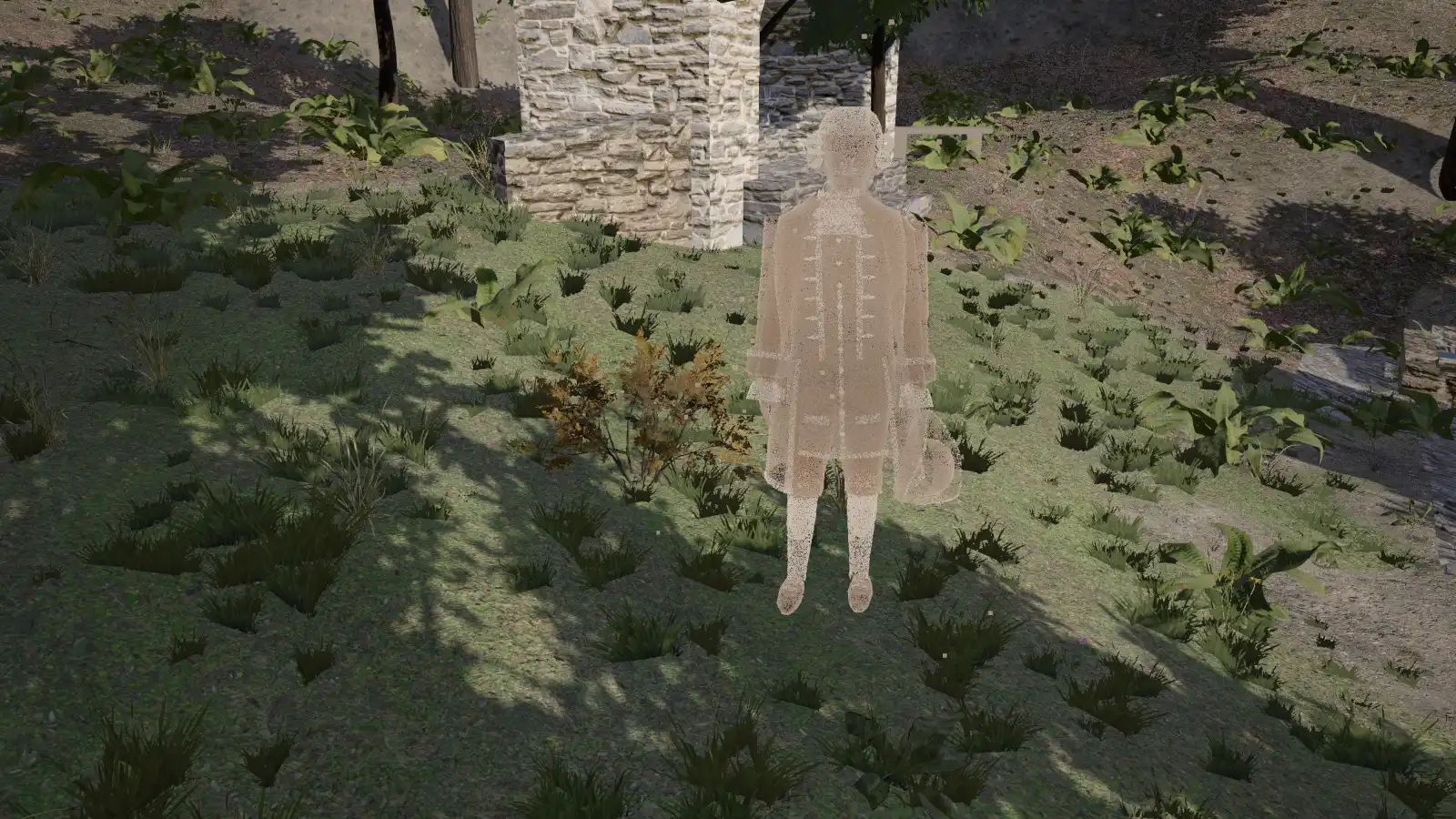
In Fiumalta, a free multiplayer game set in a village of the Ampugnani, you discover this history on foot. At the U Tiru range, the “Storia” board tells the story of the bilingual road signs and of Corsica and France in 17 sourced cards. The quest “Maghju 1769” in A Voce di Fiumalta goes back to the month of Ponte Novu. At the village fountain, the ghost of Pasquale Paoli tells his life, from Morosaglia to London, with sourced facts only and a memory that stops in 1807. And the AI villagers talk about it calmly, with facts and points of view, reminding you that they can be wrong: always check the sources.
Read more
- Castagniccia: what to see and do — a guide to its villages, convents and chestnut woods
- Hiking in the Castagniccia: 5 walks between hilltop villages and chestnut woods
- The Corsican chestnut: history, AOP flour, festivals and recipes
- Corsican culture and legends: paghjella, mazzeri, evening gatherings and the Corsican language
- The castellu di Lumitu and the chapel of San Martinu: the Cortinchi lords’ castle at Scata
- Scata and the Castagniccia in the Great War: the village’s soldier, the war memorials and the memory of the villages
- Rebuilding a whole village as a multiplayer game with AI
Sources
- Wikipédia (French), « Couvent d’Orezza »
- Wikipédia (French), « Théodore de Neuhoff »
- Wikipédia (French), « Ampugnani »
- Wikipédia (French), « Morosaglia »
- Communauté de communes de la Castagniccia-Casinca, « Découvrir les communes » (Casabianca)
- Wikipedia, « Corsican Republic »
- Slate (in French), « En Corse, des femmes ont voté dès le XVIe siècle » (the historian Antoine-Marie Graziani), 8 March 2019
- France 3 Corse ViaStella (in French), « 1755, la Constitution corse accordait déjà le droit de vote aux femmes », 21 April 2014
- Corse Net Infos (in French), « 8 mars : en Corse, les femmes votent depuis le 16e siècle », 2023
- Wikipedia, « Battle of Ponte Novu »
- Corse Net Infos, « 8 mai 1769, Ponte Novu : une bataille complètement inégale »
- Corse Net Infos, « 250e anniversaire de l’impiccati di u Niolu », 2024
- Wikipedia, « Anglo-Corsican Kingdom »
- Wikipedia, « Pasquale Paoli »
- Corse Net Infos, interview with Christian Mondoloni (customs rules and emigration)
- S. Sanguinetti, Corse, le syndrome de Pénélope (publisher’s summary)
- Corse Net Infos, on J.-P. Pellegrinetti, Une île dans la guerre. La Corse, 1914-1918 (Belin, 2020)
- Corse Net Infos, « 11 Novembre : combien de Corses sont morts pour la France ? », 2023
- Ldh / EHESS, « Des villages de Cassini aux communes d’aujourd’hui », municipal record « Scata »
- Wikipedia, « Liberation of Corsica »
- CEFAN (Université Laval), « Loi Deixonne » (1951)
- Pressenza, « La Corse a failli connaître le sort d’In Ekker », February 2018 (Argentella)
- Le Petit Journal, « 50 ans du FLNC : (…) l’héritage du Riacquistu », 12 May 2026
- Wikipédia (French), « Événements d’Aléria »
- Wikipédia (French), « Front de libération nationale corse »
- La Libre Belgique / AFP, « En Corse, le FLNC parle de reprendre du service », 16 March 2022
- Wikipédia (French), « Affaire des paillotes »
- Le Temps, « Yvan Colonna condamné à perpétuité »
- Wikipedia, « 2022 Corsica unrest »
- collectivites-locales.gouv.fr, « Statut particulier : la Corse »
- ElectionGuide, Corsica referendum of 6 July 2003
- CEFAN (Université Laval), « Corse : le statut de coofficialité de 2013 »
- Le Monde du droit, Conseil d’État, 5 June 2025, no. 500720 (French in the Assemblée de Corse)
- Wikipedia, « Corsican autonomy »
- Sénat, constitutional bill no. 869 (2024–2025), « Une Corse autonome au sein de la République »
- Le Monde du droit, « Une Corse autonome au sein de la République : adoption à l’AN », 2026
- LCP, « L’Assemblée nationale vote en faveur de l’autonomie de la Corse », 23 June 2026
- La Libre Belgique / AFP, « Menaces sur les non-Corses par le FLNC : enquête ouverte au parquet antiterroriste français », 6 August 2026
- France 3 Corse ViaStella, « Autonomie de la Corse : quel calendrier pour le projet de loi constitutionnelle ? », 9 October 2026
- X. Crettiez and P. Piazza, « Sociologie d’une conversation silencieuse », Cultures & Conflits 91/92, 2013