10 min read
Corsican culture and legends: paghjella, mazzeri, evening gatherings and the Corsican language
Paghjella singing, the mazzeri dream hunters, the veghja and its tales, Castagniccia legends, the feasts of the year and the Corsican language, with sources.
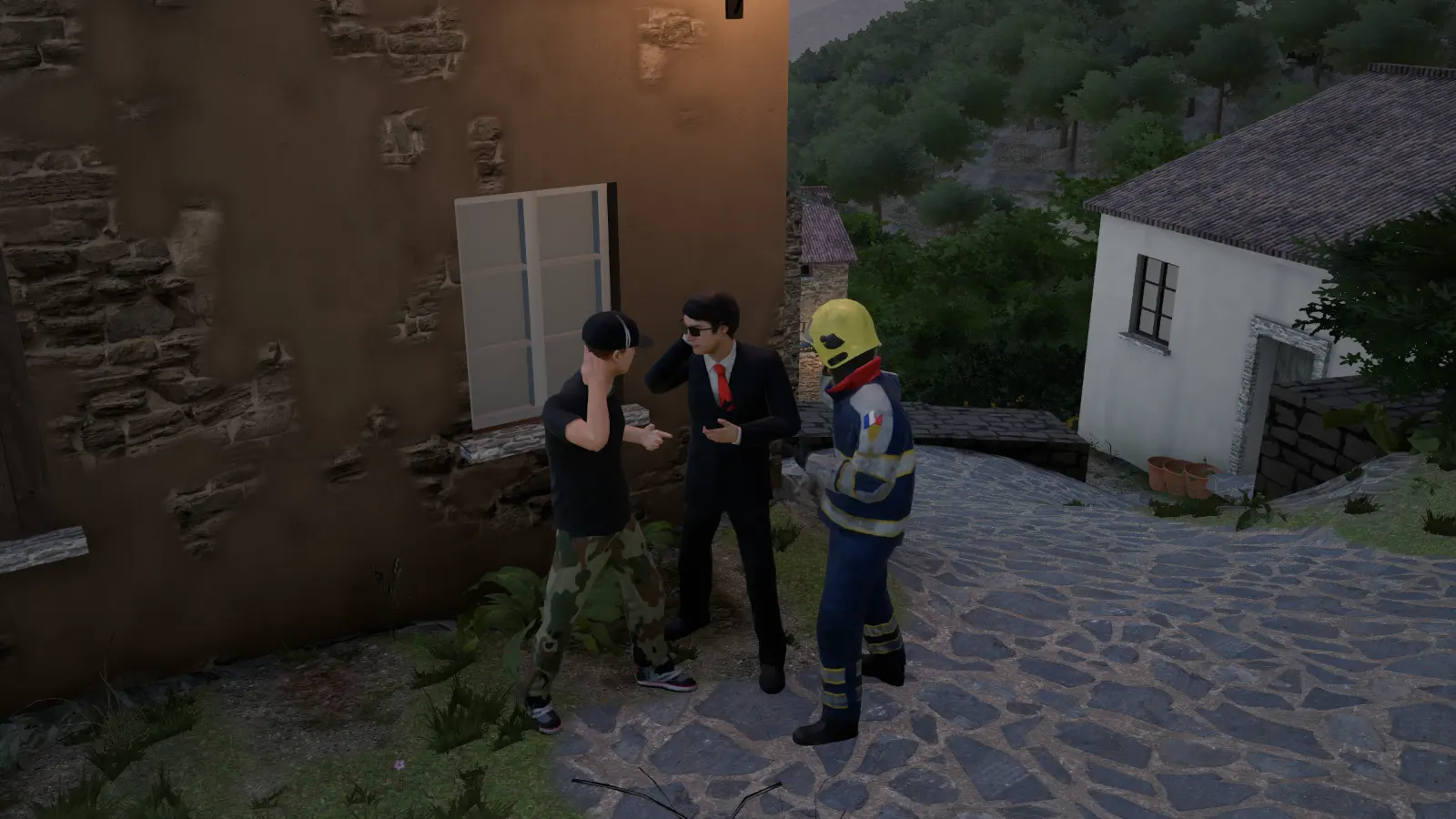
Corsican culture is handed down first of all by voice: three-voice songs on the square, stories told by the fire, a language spoken from one valley to the next with its own variations. This article goes through the paghjella, the mazzeri, the evening gathering, the legends of the Castagniccia, the feasts of the year and the Corsican language. Legends are told here as legends, and beliefs as beliefs.
The paghjella, three-voice singing
In 2009 UNESCO inscribed the cantu in paghjella, both secular and liturgical, on its List of Intangible Cultural Heritage in Need of Urgent Safeguarding.
A paghjella is three men’s voices that always come in in the same order. The seconda starts the song and carries the melody, the bassu supports it, and the terza, the highest, decorates it with small ornaments called ribuccati. The singers stand in a tight circle, one hand cupped over an ear to hear themselves and blend with the others. They sing unaccompanied and improvise: no paghjella is ever sung the same way twice. The word is thought to come from paghju, a pair. The text has six lines of eight syllables, and a song often lasts less than two minutes.
It is sung in the bar, on the village square, at mass, in processions and at fairs. Boys used to learn it by ear at church services, then in the parish choir; it declined as the young people left. Each village has its versu, its own way of singing: those of Tagliu, Sermanu and Rusiu are often cited. The polyphony of the mass is called canturia: on 28 August, at Silvareccio in the Ampugnani, the mass of Sant’Austinu is sung in canturia by singers from the neighbouring villages. And at the end of almost every service, the Dio vi salvi Regina, the hymn to the Virgin, is sung in three parts.
Chjam’è rispondi, lamentu and voceru
The chjam’è rispondi (“call and answer”) is a contest of sung, improvised verse between two poets, compared to the alternating songs of Virgil’s shepherds; it was famous among the shepherds of the Niolu.
The lamentu is a lament: there are laments of lovers, prisoners and bandits, and even for a hunting dog or a mule. The voceru, a funeral lament improvised by a woman of the dead person’s family, died out around 1950. These songs touch on mourning, and they are spoken of with respect.
The veghja and its tales
The veghja was the evening gathering around the fucone, the hearth. Stories were told there, and children were frightened into staying in at night with u ghjattumammò, the “cat-grandmother”, Dentilonga, Franca Pellella or a capra barbantana.
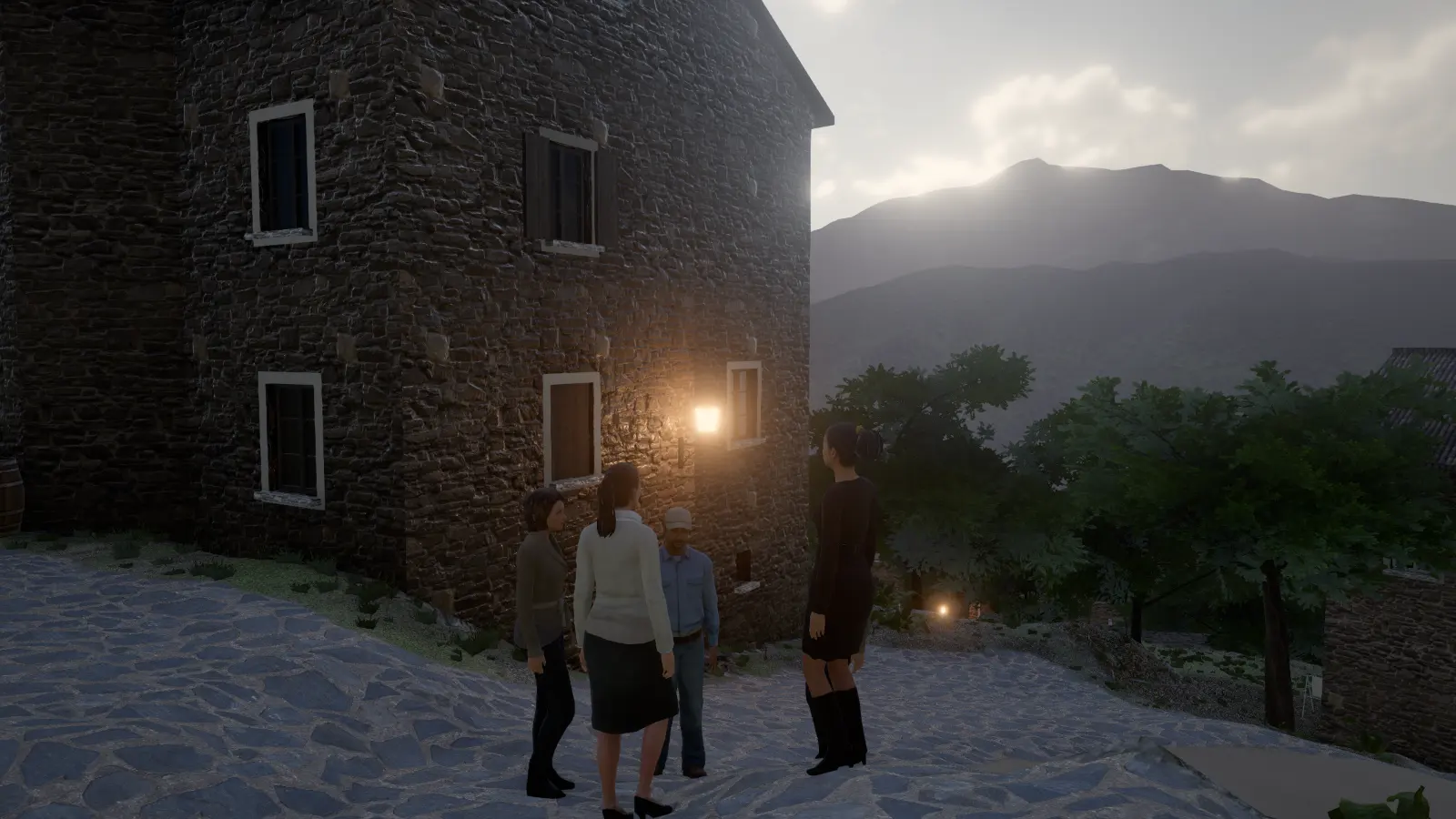
A Castagniccia tale features the fullettu, the sprite. A miller grinding his chestnuts at night takes in a child crying from hunger and cold. The child will not come near the fire, so as to hide his cloven feet. Suddenly the mill wheel stops, though the water still runs, and the child bursts out laughing and claps his hands: he is a fullettu. He is not wicked, but his pranks wear the miller out. The miller remembers that a fullettu cannot stand disorder and must put everything back in its place. One morning he empties a sack of wheat and a sack of oats in the loft and mixes them well. The fullettu starts sorting them grain by grain, tires of it and leaves the house in disgust. Elsewhere he is described as a little man with one hand of iron and one of tow, who comes in at dawn, unmakes the beds and stops the mills; and a lively person who is always in a hurry is still called a fullettu.
Other stories are told all over the island:
- I prestaticci, the lent days: a shepherd mocked March, proud to have kept all his lambs. Stung, March asked April for three days; scatterbrained April lent him eight, and March loosed a storm that carried off the whole flock, except one lamb hidden under a bundle of straw. Ever since, the first days of April stay bad.
- The fairies of the fountains: in several villages people went to the fountain at midnight on New Year’s night to throw a few grains of rice (formerly wheat) to the fairies who guard the springs, so that they would protect the village. The custom is largely lost.
The mazzeri, dream hunters
In Corsica, people believed in the mazzeri: ordinary villagers, men and women, whose spirit went hunting while they slept, often at the ford of a stream, most often after a wild boar. Turning over the animal they had killed, the mazzeru saw the face of a villager, who would die within the year. The mazzeru does not cause death: he sees it and goes with it, and some could “save” the person. The word “mazzerism” was coined in the 1970s by the writer Roccu Multedo.
On the night of 31 July to 1 August, the Mandraca, the mazzeri of rival villages or valleys fought in their dreams on the passes at their boundary, armed with dried asphodel stalks. The defeated village would have more deaths and poorer harvests in the coming year. At dawn, the direction in which the fog or the smoke came down from the pass showed who had won. That night people lit fires in front of their doors or on the church square, set vases of water in the windows and stayed indoors.
The belief is recorded mainly in the centre and south of the island (Sorru, Cruzzini, Sartenais); no source places it in the Castagniccia. It has faded, but remains a strong motif of Corsican culture. Other practices are still alive and call for discretion: the signadora “lifts” the ochju, the evil eye, with oil dropped onto a plate of water and a secret prayer that can only be learnt on Christmas night; and people carry “St Lucy’s eye”, the operculum of a sea shell, as a charm against the ochju.
Legends of the Castagniccia
Countess Mathilde. In the 10th century a Countess Mathilde is said to have ruled the pievi of Ampugnani and Orezza. She is known only from two charters of the abbey of Montecristo, a land purchase of 936 and her will of 951, which survive only as 13th-century copies and whose authenticity is disputed. The Corsican chroniclers never mention her: it was oral tradition that kept her name alive. She is not the famous Countess Matilda of Tuscany, who lived more than a century later. Old people still point out her gardens, her tower-houses, her trout ponds. People say a carpet of flowers was laid along her way from her castle of Lumitu to her chapel of San Martinu, in the commune of Scata, so loved was she, and that the people of two hamlets had to bring lizards and crickets to feed her trout: a story told with a smile, to tease the neighbouring villages. Yet the excavations at the castle of Lumitu have found nothing as old as her.
Rossi and Neri. People say that at Casabianca, in the Ampugnani, brothers fell out, some red-haired and some dark, and that their quarrel became the feud of the Rossi and Neri factions, which split much of the island. The chronicler Giustiniani tells it in the 16th century: an origin story with no documentary basis.
Count Biancu and San Petrone. According to the legend, Count Bianco drove out the Moors who had taken refuge on the mountain of Accia and founded the bishopric there; he built the church of St Peter at “San Petruculu”, “little St Peter”, as against “San Petrone”, “great St Peter”, which gave the mountain its name.
The Mal’Cunciliu chestnut tree. At Carcheto, an old hollow chestnut tree is said to show a devil’s head, a goat’s head and the shapes of witches. The legend is modern: a Corsican novelist wrote it in the 20th century, and it was later set to song.
The calendar of feasts
- 1–2 November, a notte di i morti: the dead come back to visit the house; bread, boiled chestnuts, water and a candle are left for them. In the Castagniccia, chestnuts were taken to the church.
- Christmas: children went from house to house shouting “Ô Rocchiu!” to collect wood; the great fire, u focu di Natale, burns all night in front of the church, and everyone takes a little ash home to protect the house.
- New Year: people wish each other Pace è salute, “peace and health”.
- Palm Sunday: small crosses of blessed palm, the crucette, are plaited.
- Easter Monday: the merendella, a family picnic in the countryside.
- 8 December: the Immaculate Conception, the old Corsican national feast since the Orezza consulta placed the island under the Virgin’s protection in 1735.
The Corsican language
Corsican is a Romance language described as polynomic: its varieties, from the north (cismuntincu: bellu, paese) to the south (beddu), are recognised as equally valid, and a single spelling, with its chj and ghj, can be read in each of them.
Its status is still a political question. In 1951 the Deixonne law kept it out of schools as a “dialect” close to Italian; it came in only in 1974. In 2013 the Assemblée de Corse voted to make it co-official, which the state refused under Article 2 of the Constitution, and in 2025 the Conseil d’État confirmed that the Assembly’s debates must be held in French. On the roads, by contrast, Corsica is the only region of France with bilingual signs across its whole territory. The Riacquistu of the 1970s, with ADECEC founded at Cervione, in the Castagniccia, did a great deal for the language and for singing.
A few words to start with: Bonghjornu (hello), Bona sera (good evening), Avedeci (goodbye), Cumu site? (how are you?), Grazie (thank you), Iè and Innò (yes and no), Aiò! (come on!). And two sayings: Natale à u focu, Pasqua à u ghjocu, “Christmas by the fire, Easter outdoors at play”; Hè quant’à circà una mosca in Ampugnani, “it’s like looking for a fly in the Ampugnani”, for a pointless task. According to the linguist Jean Chiorboli, the saying first named “Ampuglia”, a cove of Cap Corse.
Discover it in the game
In Fiumalta, a free multiplayer game set in a Castagniccia village, this culture is something you share. With three players or more, start a paghjella from a friend’s panel: the characters gather in a circle, hand to ear, and you sing over the voice chat. The villagers greet you in Corsican and tell the legends as legends, and the journal keeps the Corsican words you learn. The last quest of A Voce di Fiumalta ends with a three-voice song on the square, in the manner of a paghjella, on a tune invented for the game. And the whole interface exists in Corsican.
Read more
- Castagniccia: what to see and do — a guide to its villages, convents and chestnut woods
- Hiking in the Castagniccia: 5 walks between hilltop villages and chestnut woods
- History of Corsica: from Pasquale Paoli to today, the key dates
- The Corsican chestnut: history, AOP flour, festivals and recipes
- The castellu di Lumitu and the chapel of San Martinu: the Cortinchi lords’ castle at Scata
- Scata and the Castagniccia in the Great War: the village’s soldier, the war memorials and the memory of the villages
- Rebuilding a whole village as a multiplayer game with AI
Sources
- UNESCO, « Cantu in paghjella, a secular and liturgical oral tradition of Corsica » (2009)
- Wikipédia (French), « Paghjella »
- Wikipédia (French), « Chant amébée »
- Wikipédia (French), « Lamentu »
- Wikipédia (French), « Voceru »
- Wikipédia (French), « Dio vi salvi Regina »
- ICI (France Bleu RCFM), « E campa qui in Ampugnani : Sant’Austinu à Silvarecciu »
- M. Poli, article in Lapurdum 20 (2017)
- Noi Tutti, « Contes et légendes de Corse : u fullettu, le follet ou lutin »
- Wikipédia (French), « Fullettu »
- Wikipédia (French), « Mazzérisme »
- Corse Net Infos, « I mazzeri, une croyance ancienne qui continue d’inspirer et de fasciner », 31 July 2024
- Fogacci and Lari, Corsican beliefs and mazzerism, Academic Journal of Interdisciplinary Studies, 2013
- Corse Net Infos, « Dopu Cena : I prestaticci », 2 April 2019
- Corse Net Infos, « En Corse, les fées veillent sur les fontaines pour la Saint-Sylvestre », 31 December 2024
- Corse Net Infos, « Notte di i morti en Corse : une tradition toujours vivante », 1 November 2023
- Visit Corsica, « Les traditions culturelles corses à la période de Noël »
- S. Orsini, « Dure vie de château », FAGEC chronicle, Corsica magazine, May 2014 (PDF)
- Corse Sauvage, « Hameaux perdus de la comtesse Mathilde »
- Wikipédia (French), « Ampugnani » (Rossi and Neri, after Giustiniani)
- Wikipédia (French), « Castagniccia »
- Castagniccia Mare e Monti tourist office, « Carchetu e Brusticu »
- J.-M. Comiti, « Polynomie et standardisation de l’orthographe », Langues et cité 22, 2012
- CEFAN (Université Laval), « Loi Deixonne » (1951)
- CEFAN (Université Laval), « Corse : le statut de coofficialité de 2013 »
- Wikipédia (French), « Signalisation routière bilingue en France »
- Corse Net Infos, interview with the linguist J. Chiorboli, 17 November 2013
- R. and J. Colonna d’Istria, Pruverbii di Corsica, 1996, via the ParemioRom database
- Wikivoyage, « Corsican phrasebook »