9 min read
The Corsican chestnut: history, AOP flour, festivals and recipes
The Corsican chestnut: the Castagniccia’s bread tree, drying house and mill, AOP chestnut flour, the season’s festivals and recipes from pulenda to nicci.
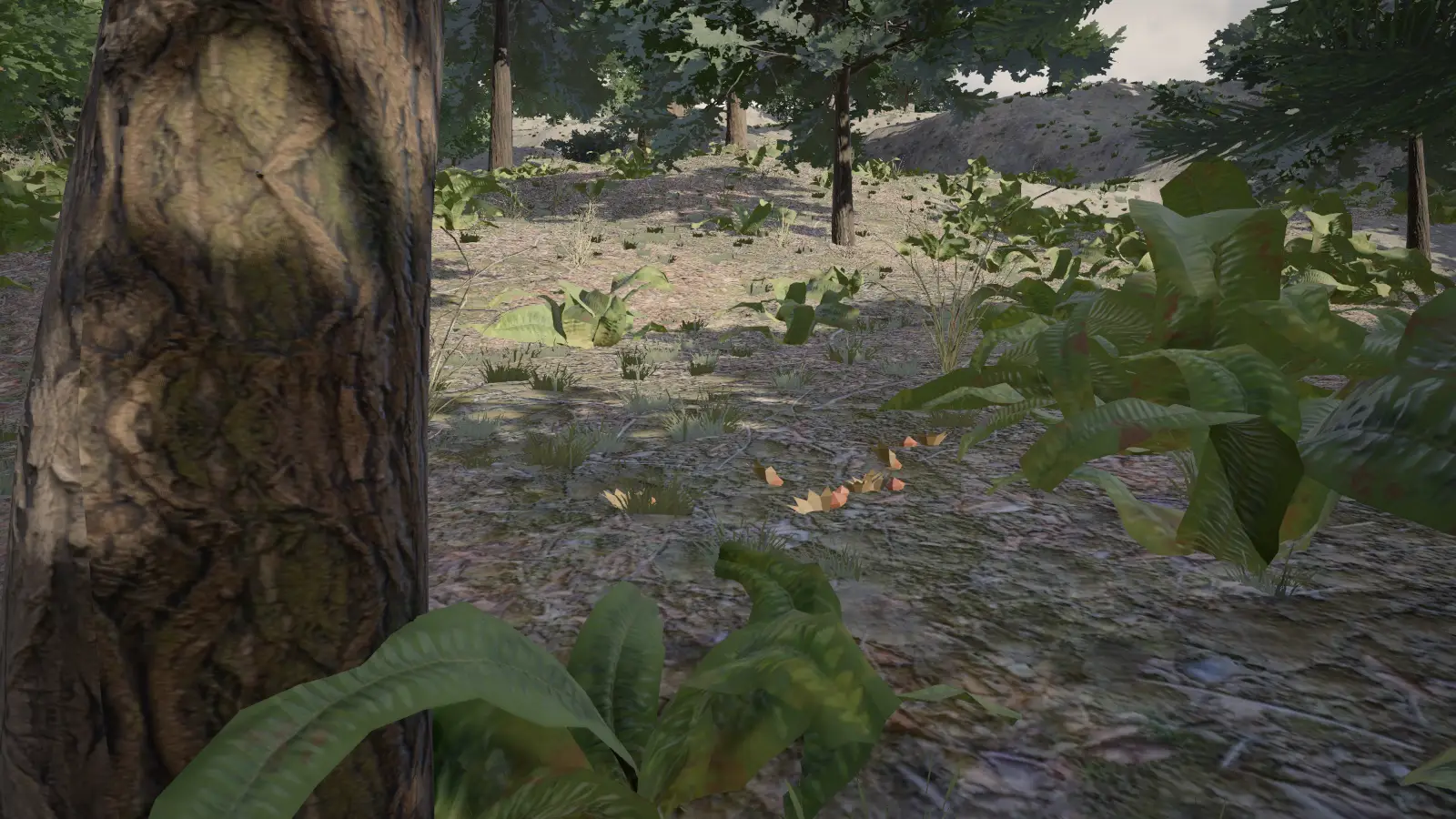
In the Castagniccia, people did not just plant chestnut trees: they lived off them. For centuries the chestnut was the bread of the Corsican mountains, so much so that the tree gave its name to a whole region. Here is its story, how AOP Corsican chestnut flour is made, the festivals of the season and the recipes still made with it.
The bread tree: a very old story
The chestnut tree has grown in Corsica since the end of the last ice age, about 7,000 years ago: its pollen is found in the sediments. A chestnut grove is already on record in 1289, when the Cortinchi lords swore fealty to Genoa “in a chestnut grove near the church” at Vescovato.
It was the Genoese, though, who made it the island’s tree. From the 16th century on they obliged Corsican farmers and landholders to plant fruit trees every year, chestnuts among them, along with figs, olives and mulberries: four trees a year at first, ten later on, on pain of a fine (the date of the first order is still debated). Corsica’s chestnut groves reached their greatest extent around 1800, with about 35,000 hectares.
The reasons were simple. A chestnut grove could yield up to 20 quintals a hectare, when a cereal field gave about 5 in the early 19th century. In 1802 a survey by the prefect of the Golo department noted that chestnut bread was eaten nine months a year, 500 to 600 grams a day for an adult. You could even own a tree without owning the land it grew on: this was called “tree ownership”. Pasquale Paoli is credited with saying “as long as we have chestnuts, we shall have bread”; the words are attributed to him, without proof.
Every part of the tree was used: the wood for furniture, roof frames and floors, the leaves for baking certain pastries, the shoots for baskets, like the sportelli woven at Polveroso, the charcoal for the forges. In the 19th century its tannin-rich wood even fed gallic-acid and tannin works in the Fium’Alto valley. The first of the island’s six such works opened in 1873 on the riverbank, at the place called Fabbrica Vecchia, in the commune of Scata: in 1876 sixteen workers made gallic acid there for dyeing silk black, and nine woodcutters felled Castagniccia chestnut trees for it; in 1882 the business moved to Pruno. The works at Folelli, at the river mouth, closed in 1956.
A year in the chestnut grove
The chestnut tree loves water and grows between 400 and 1,200 metres. It flowers in cream catkins around mid-June, from which the bees make a strong, tannic, slightly bitter honey, taken in July. Each burr holds two or three nuts.
The AOP growers’ calendar sums up the year’s work:
- January: pruning the trees, cutting firewood.
- February: taking scions from the good varieties, keeping a cleared strip against fire.
- Late April and May: grafting, as the sap rises.
- August: watering young trees if the drought lasts.
- September: mowing the grass and bracken under the trees and laying the nets; overhauling the drying houses, hulling machines and mills.
- October: the chestnuts fall from the second half of the month; in the Orezza valley, picking starts around the 20th. The drying-house fires are lit.
- November and December: planting young trees, the first flour at the mill; in the Orezza, the drying-house fire is put out shortly before Christmas.
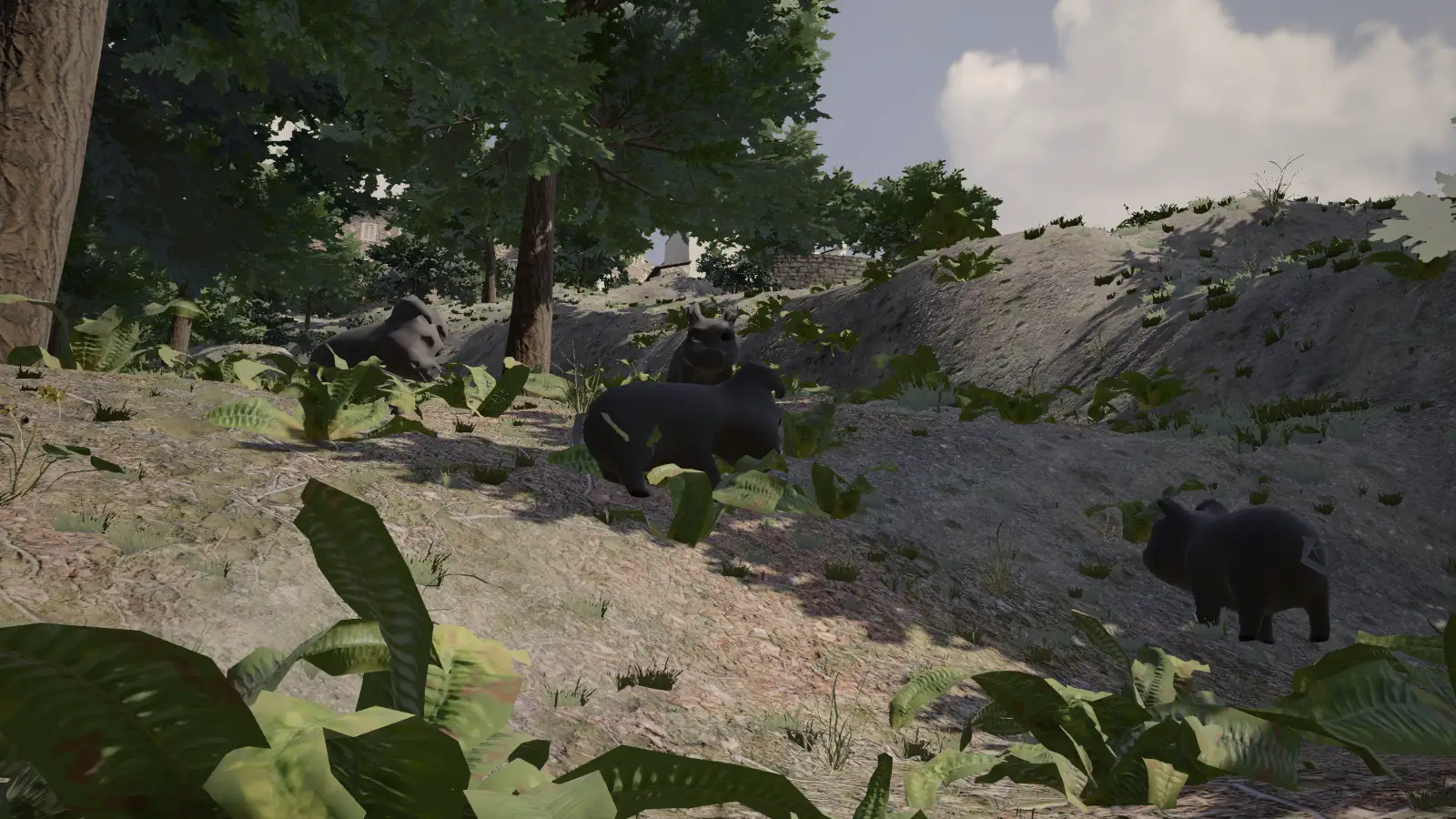
During the harvest, pigs are often kept out of the chestnut groves; afterwards they are turned out under the trees, and the rules of the Corsican AOP cured meats require exactly this finishing on chestnuts and acorns.
A study in the 1980s and 1990s recorded about 47 chestnut and marron varieties in Corsica, with telling names: campanese, gentile, tighjulana, morianinca, saorida, russella, merunaccia, and at altitude insetu petrinu or muraggione.
From the drying house to the mill
Chestnuts for flour are dried in the grataghju, the drying house: a slatted floor upstairs, over a fire of chestnut wood kept going day and night for about three weeks. For the first ten days or so the chestnuts “sweat” out their water, and the smoke drives out the worms. Last year’s husks, piled around the fire, hold in the heat. In a well-built drying house the two doors never face each other. In some villages, like the one that inspired Fiumalta, the drying rooms were in the lofts of the houses.
Once dry, the chestnuts were beaten in sacks, about thirty times, to remove the shell and the thin inner skin, then winnowed and sorted by hand; the damaged ones went to the pigs. They were then ground between millstones driven by the river, the miller’s whole art lying in matching the fall of chestnuts to the flow of the water. A granite stone does not heat the flour. It takes about three kilos of dried chestnuts to make one kilo of flour. In the village of Piano, in the Ampugnani, the cellars still hold millstones: big ones for chestnuts, small ones for oil.
AOP Corsican chestnut flour
Corsican chestnut flour – *farina castagnina corsa* received the French controlled designation of origin (AOC) by a decree of 24 November 2006, then the European protected designation of origin (AOP/PDO) in 2010. According to the specification published by INAO, the French body for designations of origin:
- The area: 270 communes in southern and Upper Corsica, generally between 400 and 1,200 m.
- The trees: only the listed local varieties (about fifty names) are allowed, grafted, at least ten years old; hybrids are banned.
- The harvest: chestnuts are picked up after they fall naturally, between 1 October and 31 December.
- The drying: at least 18 days in a wood-fired drying house, or at least 6 days in a mechanical forced-air dryer. The chestnuts may also be oven-baked (biscuitage), which gives a darker flour.
- The milling: on millstones of granite, flint or schist.
- The taste: creamy white to russet in colour, markedly sweet, with aromas of dried chestnut, dried fruit, biscuit and spice, sometimes milky notes.
This flour has come a long way back. After ink disease and chestnut blight, the gall wasp cynips, a small insect from Asia spotted in Corsica in 2010, cut harvests by up to 80 %: AOP flour output fell from 110 tonnes in 2010 to 16 tonnes in 2018. An insect that parasitises it, Torymus, has been released since 2011; it is now established, and the 2023 harvest, around 60 tonnes, was the best since the crisis. INAO’s file listed about 120 traditional mills, 33 of them still working.
Chestnut festivals and fairs
Corsica’s great chestnut fair is not in the Castagniccia but at Bocognano, between Ajaccio and Corte: the Fiera di a Castagna has been held there in early December since 1982, run by the village’s community association. Seedlings are sold, the best flours win prizes, and the fair helped revive the trade.
In the Castagniccia, the chestnut season meets the calendar of the saints and the dead:
- The night of the dead (1–2 November): bread, water, a candle and ballotte, boiled chestnuts, are left on the table for the dead who come back to visit the house. In the Castagniccia, chestnuts were taken to the church that evening as an offering for the departed. In Bastia, children wore a necklace of chestnuts and small red apples.
- St Martin’s day (11 November): the saint of plenty, Martinu hè u santu di a divizia; the new wine was broached.
- St Cecilia’s day (22 November) falls in the middle of the chestnut season.
Village fêtes and markets change from year to year: ask the tourist office for the autumn programme.
Chestnut-flour recipes
- Pulenda: one kilo of chestnut flour to two litres of water and a pinch of salt, in a cauldron. It is stirred without stopping with a stick, the pulindaghju, people taking turns, for 40 to 50 minutes, until the dough forms a ball around the stick. It is turned out onto a floured cloth and cut with a thread. It is the winter dish, eaten with brocciu (Corsica’s fresh whey cheese), figatellu sausage, grilled chops or fried eggs; the next day the leftovers are rolled in flour and fried. It is also served at the Christmas Eve meal with hot charcuterie.
- Nicci: thin chestnut-flour pancakes baked between two long-handled irons, plain or with brocciu.
- Granaghjoli: a chestnut-flour porridge, also eaten with brocciu.
- Castagnacciu: the chestnut-flour cake, nicknamed “wooden bread”.
- Bread: chestnut flour rises poorly, so it was mixed with wheat, barley or rye flour.
- Chestnut-flour tart, village style: a very runny batter for a thin tart, topped with walnuts soaked the day before, because “a thick batter would make a tart that is too heavy”.
Without flour, the chestnut is also eaten whole: these are the ballotte, boiled chestnuts early in the season; later they are roasted. And the chestnut leaf serves as a baking dish: falculelle (brocciu, egg and sugar) and migliacci (savoury, with fresh cheese) are baked in the oven on a leaf. Neither contains chestnut flour, and the leaf is not eaten.
They say that at a wedding in the canton of Alesani, twenty-two different dishes were served, all made with chestnut flour. And to talk chestnuts in Corsican: u castagnu (the chestnut tree), a castagna (the chestnut), u castagnetu (the chestnut grove), u grataghju (the drying house), e ballotte (boiled chestnuts).
Discover it in the game
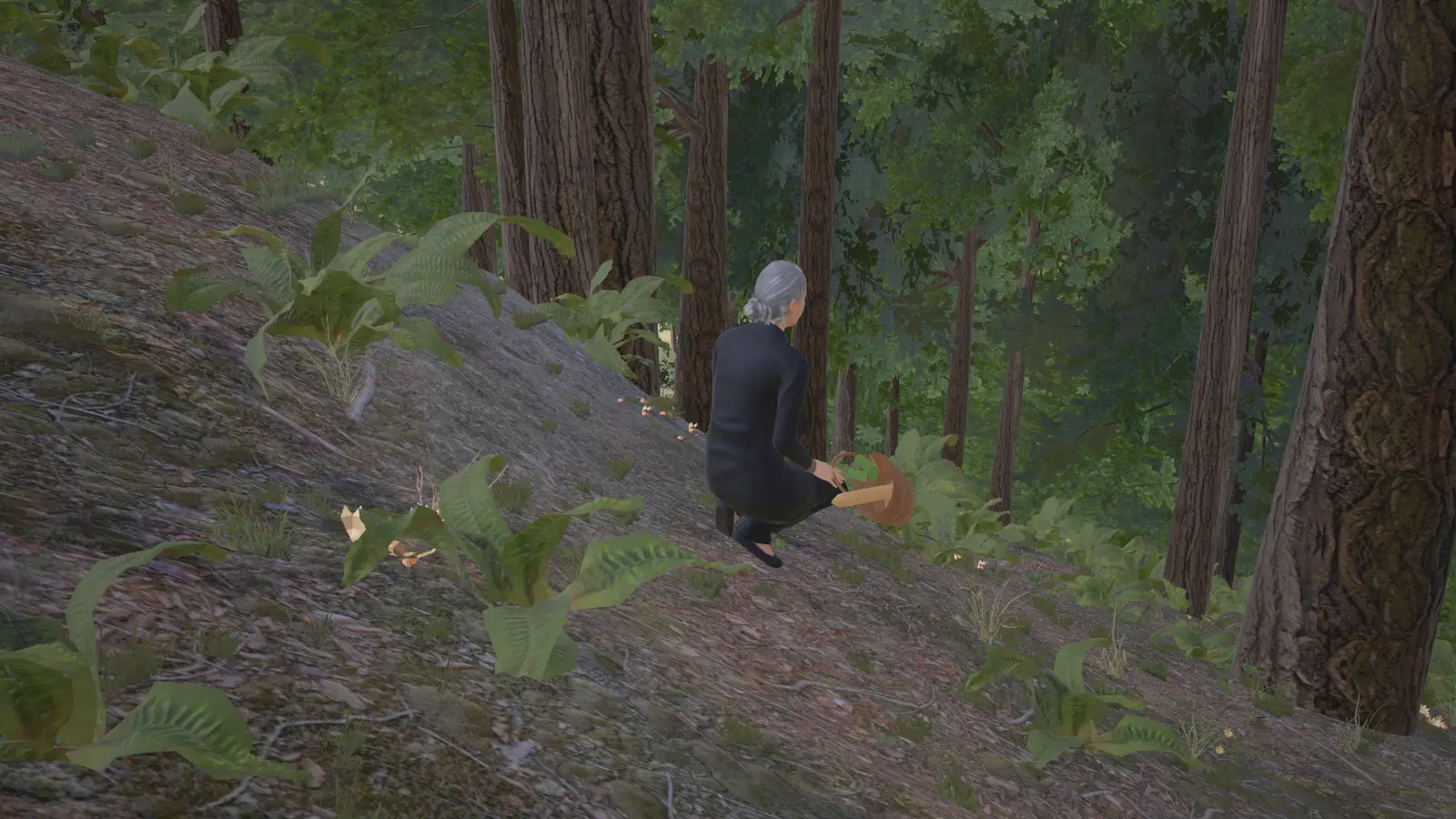
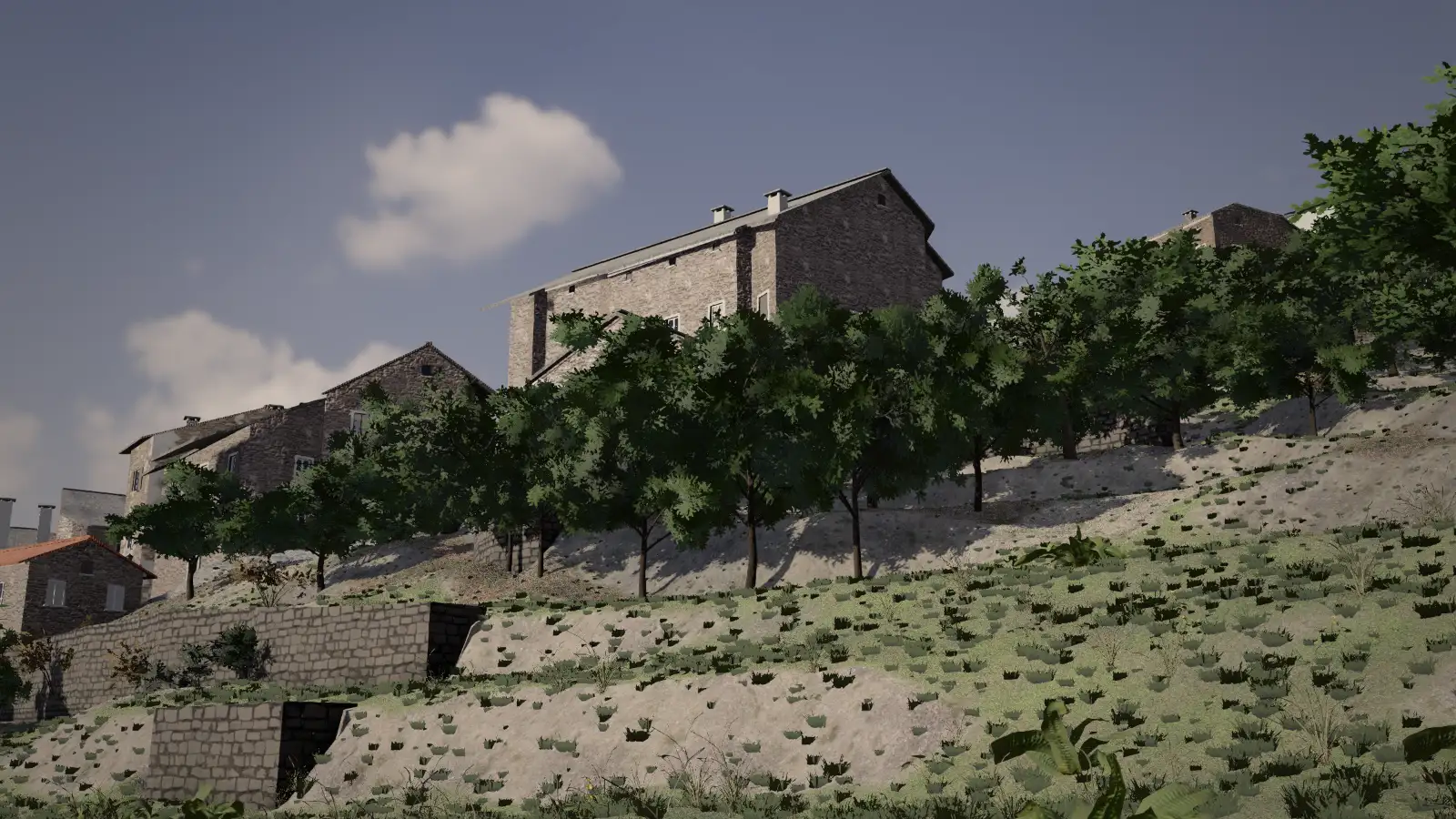
In Fiumalta, a free multiplayer game set in a Castagniccia village, the chestnut is everywhere. In autumn and winter, press E under a chestnut tree to pick up chestnuts and put them in your pockets. The quest “A cugliera, 1956” in A Voce di Fiumalta has you pick, carry the basket, beat the sacks, winnow and sort by hand, as it was done in the village. Pigs root in the chestnut wood, and the AI villagers tell you about the drying house, the pulenda and the November feasts.
Read more
- Castagniccia: what to see and do — a guide to its villages, convents and chestnut woods
- Hiking in the Castagniccia: 5 walks between hilltop villages and chestnut woods
- History of Corsica: from Pasquale Paoli to today, the key dates
- Corsican culture and legends: paghjella, mazzeri, evening gatherings and the Corsican language
- The castellu di Lumitu and the chapel of San Martinu: the Cortinchi lords’ castle at Scata
- Scata and the Castagniccia in the Great War: the village’s soldier, the war memorials and the memory of the villages
- Rebuilding a whole village as a multiplayer game with AI
Sources
- INAO, « Farine de châtaigne corse – Farina castagnina corsa » (AOP)
- Wikipédia (French), « Farine de châtaigne corse »
- AOP Farine de châtaigne corse growers’ syndicate, « Calendrier »
- Collectivité de Corse / Educorsica, U mio mondu, sheet 2 « Les savoir-faire insulaires » (PDF)
- POP (French Ministry of Culture), gallic-acid works known as Fabrica Vecchia, Scata, IA2B000621
- Corse Net Infos, « DOSSIER. Le châtaignier et la Corse, des histoires intrinsèquement liées », 11 December 2022
- Corse Net Infos, « Châtaigne corse : après la crise du cynips, la récolte 2023 s’annonce prometteuse », 19 November 2023
- Corse Net Infos, « Châtaigneraie : 470 lâchers de Torymus pour lutter contre le cynips », 2014
- Corse Net Infos, « Valle d’Orezza : la castanéiculture à l’usu anticu », 24 January 2022
- Villages de Corse, « Farine de châtaignes »
- Corse Net Infos, « Bocognano : l’édition 2023 de A Fiera di a castagna se déroulera du 8 au 10 décembre »
- Corse Net Infos, « Notte di i morti en Corse : une tradition toujours vivante », 1 November 2023
- Corse Net Infos, « I Santi : Santu Martinu », 11 November 2013
- Corse Net Infos, « I Santi : Santa Cicilia » (2013)
- Wikipédia (French), « Pulenda »
- Wikipédia (French), « Falculelle »
- Wikipédia (French), « Castagnacciu »
- Wikipédia (French), « Brocciu »
- Wikipedia, « Neccio »
- Visit Corsica, « Le miel corse »
- Wikipédia (French), « Famille Cortinco » (the oath of 1289)